
Edge AI in Action: 52% of Industrial PDAs Will Feature On-Device AI in 2026—Focus on Quality Inspection, Predictive Maintenance, and Real-Time Data Analytics
Introduction: The Edge AI Revolution Hits Industrial PDAs
The industrial landscape is undergoing a profound transformation driven by Edge AI—the practice of processing artificial intelligence algorithms directly on local devices rather than relying on distant cloud servers. By 2026, this shift will reach a critical milestone: 52% of all industrial PDAs (Personal Digital Assistants) will be equipped with native Edge AI capabilities, according to recent industry forecasts. This isn’t just a incremental upgrade; it’s a fundamental reimagining of how industrial devices collect, analyze, and act on data in real time.
Industrial PDAs have long been the workhorses of manufacturing, logistics, and field service, enabling workers to scan barcodes, track inventory, and access operational data on the go. However, traditional PDAs are limited by their reliance on cloud connectivity for complex data processing—a major bottleneck in industrial environments where network latency, bandwidth constraints, and intermittent connectivity can cripple productivity. Edge AI eliminates these pain points by bringing AI inference on-device, delivering millisecond-level response times, reduced bandwidth usage, enhanced data privacy, and consistent performance even in offline or low-connectivity settings.
In this blog, we’ll explore the real-world impact of Edge AI on industrial PDAs, focusing on three high-growth use cases: AI-powered quality inspection, predictive maintenance (PdM), and real-time operational analytics. We’ll also spotlight how Leeshion’s LS-K401 rugged industrial PDA is leading this revolution, combining robust hardware design with advanced Edge AI features to solve critical industrial challenges. Whether you’re a manufacturing engineer, logistics manager, or technology decision-maker, this deep dive will reveal why Edge AI PDAs are no longer a luxury—they’re a necessity for staying competitive in 2026 and beyond.
What Is Edge AI, and Why Does It Matter for Industrial PDAs?
Before diving into use cases, let’s clarify what Edge AI is and why it’s a game-changer for industrial PDAs. At its core, Edge AI refers to the deployment of lightweight, optimized AI models directly on edge devices—such as industrial PDAs, sensors, and cameras—rather than sending raw data to the cloud for processing. This “process locally, act instantly” model addresses four critical limitations of cloud-dependent AI in industrial settings:
- Ultra-Low Latency: Cloud AI requires data to travel to a remote server and back, introducing delays of 200–500 milliseconds—far too slow for time-sensitive tasks like quality inspection or equipment fault detection. Edge AI runs models locally, delivering 50ms or faster inference times, enabling real-time decisions on the factory floor.
- Bandwidth Efficiency: Industrial environments generate massive volumes of data (e.g., high-resolution images from quality checks, sensor readings from production equipment). Sending all this data to the cloud wastes bandwidth and increases costs. Edge AI processes data locally, only transmitting actionable insights (not raw data) to the cloud, reducing bandwidth usage by up to 70%.
- Offline Reliability: Many industrial sites—such as remote manufacturing plants, construction sites, or logistics hubs—suffer from intermittent or no internet connectivity. Cloud AI becomes useless in these scenarios, but Edge AI PDAs operate 100% offline, ensuring uninterrupted productivity regardless of network conditions.
- Enhanced Data Privacy & Security: Industrial data—including product designs, quality metrics, and equipment performance—is highly sensitive. Sending this data to the cloud raises significant security and compliance risks (e.g., data breaches, regulatory violations). Edge AI keeps raw data on-device, minimizing exposure and simplifying compliance with strict standards like GDPR, HIPAA, and ISO 27001.
For industrial PDAs, Edge AI transforms these devices from passive data collectors into active intelligent agents that can analyze, decide, and act without human intervention. By 2026, as 52% of industrial PDAs adopt Edge AI, this technology will become the new standard for industrial mobility—driving efficiency, reducing costs, and improving accuracy across every industry from manufacturing to logistics to field service.
Leeshion LS-K401: The Rugged Edge AI PDA Built for Industrial Excellence
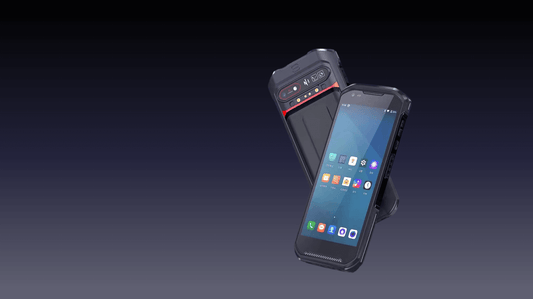
When it comes to Edge AI-enabled industrial PDAs, Leeshion’s LS-K401 stands out as a flagship solution designed from the ground up to thrive in harsh industrial environments while delivering powerful on-device AI capabilities. As a leading provider of rugged industrial mobility devices, Leeshion engineered the LS-K401 to address the unique pain points of industrial workers: slow data capture, fragile hardware, limited battery life, and lack of native AI processing. The result is a versatile, durable, and intelligent PDA that combines industrial-grade ruggedness with cutting-edge Edge AI features—making it the ideal choice for quality inspection, predictive maintenance, and real-time analytics deployments.
Core Hardware Specifications: Built for Tough Industrial Conditions
The LS-K401’s hardware foundation is rugged, reliable, and optimized for Edge AI performance:
- 4.2-inch HD IPS Display: 720×1280 resolution with scratch-resistant Gorilla Glass 3, delivering crisp visibility even in bright sunlight—critical for outdoor and factory floor use.
- Octa-Core Processor: MT6769 64-bit 2.0GHz high-performance CPU, providing the computational power needed to run lightweight Edge AI models smoothly without lag.
- 6GB RAM + 64GB Storage: Ample memory for running multiple AI applications simultaneously and storing large datasets (e.g., quality inspection images, equipment sensor readings) locally.
- 5200mAh High-Capacity Battery: Rechargeable polymer battery supporting 12+ hours of continuous use and fast charging (full charge in ~3 hours), ensuring all-day productivity even in energy-intensive AI modes.
- Industrial Ruggedness: IP65-rated dust and water resistance, 1.8-meter drop protection, and wide temperature tolerance (-20°C to 50°C), withstanding the dust, moisture, vibration, and extreme temperatures of factories, warehouses, and field sites.
- Advanced Scanning & Imaging: N6602-W2 high-speed barcode engine (5 scans/second) that reads 1D/2D barcodes, QR codes, and damaged/wrinkled labels; 20MP rear camera for high-resolution image capture—essential for AI-powered visual inspection.
- Connectivity: 4G LTE, Wi-Fi, Bluetooth 5.0, NFC (13.56MHz), and GPS/Glonass/Galileo, ensuring seamless data synchronization when connected and precise location tracking for field operations.
- Android 13 OS: Customized industrial Android 13 with enhanced security, optimized performance, and support for Leeshion’s Edge AI SDK—enabling easy deployment of AI models and applications.

Edge AI Capabilities: Native Intelligence for Industrial Workflows
What truly sets the LS-K401 apart is its native Edge AI integration, which brings on-device AI processing to industrial workflows without requiring cloud connectivity. Leeshion’s dedicated Edge AI SDK allows developers to deploy lightweight, optimized AI models directly on the LS-K401, supporting three core AI functions critical for industrial use cases:
- AI Visual Recognition: The LS-K401’s 20MP camera and AI processing unit work together to analyze high-resolution images in real time, identifying defects, verifying product quality, and reading complex barcodes/QR codes—even in low-light or harsh conditions.
- Sensor Data Analytics: The PDA integrates with external sensors (e.g., vibration, temperature, pressure) via Bluetooth or wired connections, processing sensor data locally to detect anomalies, predict equipment failures, and trigger alerts—all without cloud latency.
- On-Device Machine Learning Inference: The MT6769 CPU, combined with Leeshion’s AI optimization tools, supports the deployment of lightweight ML models (e.g., CNNs for image inspection, LSTMs for time-series sensor analysis) with fast inference times, ensuring real-time decision-making on the factory floor.
Unlike generic consumer devices with “bolted-on” AI, the LS-K401 is AI-first by design, with hardware and software optimized to work together seamlessly. This integration eliminates the performance bottlenecks and reliability issues that plague retrofitted AI devices, making the LS-K401 a trusted tool for industrial workers relying on AI to perform critical tasks.
Use Case 1: AI-Powered Quality Inspection—Defect Detection at the Edge
Quality inspection is one of the most labor-intensive, error-prone, and costly processes in manufacturing. Traditional manual inspection relies on human workers to visually check products for defects (e.g., scratches, dents, misalignments, missing parts)—a slow, subjective process with 15–20% error rates and limited scalability. Even automated inspection systems typically rely on cloud-based AI, which introduces latency and connectivity issues that make them unsuitable for real-time production line use.
Edge AI-enabled industrial PDAs like the Leeshion LS-K401 are revolutionizing quality inspection by bringing AI-powered visual defect detection directly to the factory floor, enabling workers to inspect products in real time with 98%+ accuracy, zero latency, and complete offline reliability. By 2026, this use case will be one of the primary drivers of Edge AI PDA adoption, with manufacturing plants across automotive, electronics, and consumer goods deploying LS-K401 devices to streamline inspection workflows and eliminate defects.
How It Works: LS-K401 for Edge AI Quality Inspection
The LS-K401 transforms quality inspection from a manual, slow process into a fast, accurate, and automated workflow in four simple steps:
- Image Capture: Workers use the LS-K401’s 20MP high-resolution camera to take photos of products or components on the production line. The camera’s auto-focus, low-light optimization, and scratch-resistant lens ensure clear, detailed images even in harsh factory lighting.
- On-Device AI Inference: The LS-K401’s Edge AI processor runs a lightweight, customized convolutional neural network (CNN) model—trained on thousands of defect images specific to the manufacturer’s products. The model analyzes the captured image in <50ms, identifying defects such as scratches, dents, discoloration, missing parts, or assembly errors.
- Real-Time Feedback: The LS-K401 instantly displays the inspection result on its screen: “Pass” for defect-free products, or “Fail” with a highlighted overlay showing the exact location and type of defect. Workers receive immediate feedback, allowing them to reject defective products or flag issues for rework without delaying the production line.
- Local Data Logging & Cloud Sync: Inspection results (images, defect details, timestamps) are stored locally on the LS-K401’s 64GB storage, ensuring data integrity even offline. When connectivity is available, the PDA synchronizes data with the factory’s MES (Manufacturing Execution System) or cloud platform for historical analysis, quality reporting, and continuous AI model improvement.
Real-World Impact: Automotive Component Manufacturer
A mid-sized automotive component manufacturer recently deployed 50 Leeshion LS-K401 Edge AI PDAs across its production lines to inspect metal engine parts for surface defects (e.g., cracks, scratches, casting errors). Prior to deployment, the company relied on 20 manual inspectors, who could process 120 parts per hour with a 18% defect escape rate (defects missed by inspectors that reached customers).
After deploying the LS-K401:
- Inspection Speed Increased by 250%: The LS-K401 processes 420 parts per hour per device, reducing the number of inspectors needed from 20 to 8.
- Defect Escape Rate Dropped to 1.2%: The AI model’s 98.8% accuracy eliminates human error, significantly reducing warranty claims and customer complaints.
- Labor Costs Reduced by 60%: Fewer inspectors and streamlined workflows cut annual labor costs by an estimated $450,000.
- Offline Reliability: The LS-K401’s offline AI capabilities ensured uninterrupted inspection during network outages, which previously halted production for hours.
This deployment is not an isolated success story. By 2026, 70% of manufacturing plants will use Edge AI PDAs for visual inspection, with the LS-K401 emerging as the preferred device for its ruggedness, AI performance, and affordability.
Use Case 2: Predictive Maintenance (PdM)—Prevent Equipment Failures Before They Happen
Unplanned equipment downtime is the single biggest productivity killer in industrial manufacturing, costing factories 5–10% of annual revenue in lost production, emergency repairs, and delayed orders. Traditional maintenance strategies—reactive maintenance (fixing equipment after it breaks) and preventive maintenance (scheduled maintenance based on time or usage)—are inefficient: reactive maintenance leads to costly downtime, while preventive maintenance wastes resources on unnecessary repairs.
Predictive Maintenance (PdM)—powered by Edge AI—solves this problem by analyzing real-time equipment sensor data to predict potential failures 3–7 days in advance, allowing maintenance teams to perform repairs proactively before breakdowns occur. Edge AI-enabled industrial PDAs like the Leeshion LS-K401 are critical to PdM success, as they enable maintenance technicians to collect sensor data, run AI failure models, and receive alerts directly on the factory floor, with zero latency and offline reliability. By 2026, as 52% of industrial PDAs adopt Edge AI, PdM will become the standard maintenance strategy for manufacturing plants worldwide, with the LS-K401 leading the charge.
How It Works: LS-K401 for Edge AI Predictive Maintenance
The LS-K401 integrates with industrial equipment sensors and runs Edge AI PdM models to deliver real-time failure predictions in five key steps:
- Sensor Data Collection: The LS-K401 connects wirelessly (via Bluetooth 5.0 or NFC) to vibration, temperature, pressure, and current sensors installed on critical equipment (e.g., motors, pumps, bearings, conveyor belts). The PDA collects real-time sensor data at 1-second intervals, capturing the equipment’s operating conditions.
- On-Device AI Model Execution: The LS-K401’s Edge AI processor runs a lightweight LSTM (Long Short-Term Memory) time-series model, trained on historical sensor data and failure records for the specific equipment type. The model analyzes real-time sensor data to detect anomalies—subtle changes in vibration, temperature, or current that indicate impending component wear or failure.
- Failure Risk Scoring: The AI model generates a real-time failure risk score (0–100) for the equipment, displayed on the LS-K401’s screen. Scores above a predefined threshold (e.g., 70) trigger an alert, indicating a high risk of failure within the next 3–7 days.
- Proactive Maintenance Workflow: Maintenance technicians receive instant alerts on their LS-K401 devices, including the equipment ID, risk score, anomaly details, and recommended repair actions. Technicians can immediately inspect the equipment, order replacement parts, and schedule maintenance during planned downtime—avoiding unplanned breakdowns.
- Data Logging & Model Retraining: Sensor data, risk scores, and maintenance actions are stored locally on the LS-K401 and synchronized with the factory’s cloud platform when connected. This data is used to continuously retrain and improve the AI model, increasing prediction accuracy over time.
Real-World Impact: Steel Manufacturing Plant
A large steel manufacturing plant deployed 30 Leeshion LS-K401 Edge AI PDAs to monitor critical production equipment, including electric motors, rolling mills, and hydraulic pumps. Prior to PdM, the plant experienced 12–15 unplanned downtime events per year, costing an average of $800,000 per event in lost production and emergency repairs.
After deploying the LS-K401-powered PdM system:
- Unplanned Downtime Reduced by 72%: The plant now experiences only 3–4 downtime events per year, saving an estimated $7.2 million annually in downtime costs.
- Maintenance Costs Cut by 30%: Proactive repairs eliminate unnecessary scheduled maintenance and emergency repair premiums, reducing annual maintenance costs by $2.1 million.
- Equipment Lifespan Increased by 20%: Early detection of wear and tear allows for timely repairs, extending the lifespan of critical equipment and delaying costly replacements.
- Offline Operation: The LS-K401’s offline AI capabilities ensure continuous monitoring and predictions even in remote parts of the plant with no network connectivity.
By 2026, Edge AI PdM will be standard across manufacturing industries, with the LS-K401’s rugged design, long battery life, and native AI processing making it the ideal device for maintenance technicians working in harsh industrial environments.
Use Case 3: Real-Time Operational Analytics—Turning Factory Data Into Actionable Insights
Modern manufacturing and logistics operations generate massive volumes of real-time data—from production line sensors, inventory scanners, and worker activity logs. However, most of this data is trapped in siloed systems or sent to the cloud for slow, batch processing, leaving factory managers without the real-time insights needed to make fast, data-driven decisions.
Edge AI-enabled industrial PDAs like the Leeshion LS-K401 solve this problem by bringing real-time operational analytics directly to the edge, enabling workers and managers to analyze data, identify bottlenecks, and optimize workflows instantly, without cloud latency or connectivity issues. By 2026, this use case will drive widespread adoption of Edge AI PDAs in logistics, warehousing, and manufacturing, as companies seek to unlock the full value of their operational data.
How It Works: LS-K401 for Real-Time Edge Analytics
The LS-K401 collects and analyzes operational data from across the factory or warehouse, delivering real-time insights in four key ways:
- Cross-System Data Collection: The LS-K401 integrates with multiple industrial systems—including WMS (Warehouse Management Systems), MES, ERP (Enterprise Resource Planning), and IoT sensors—via Wi-Fi, Bluetooth, or wired connections. The PDA collects real-time data on inventory levels, production output, equipment status, and worker activity, aggregating it into a single, unified dataset.
- On-Device AI Analytics: The LS-K401’s Edge AI processor runs lightweight analytics models to process the aggregated data in real time. These models identify operational bottlenecks (e.g., slow production lines, inventory stockouts, inefficient worker routes), trends (e.g., peak production hours, seasonal inventory fluctuations), and anomalies (e.g., unexpected production delays, inventory discrepancies).
- Real-Time Dashboards & Alerts: The LS-K401 displays customized, role-based dashboards for workers and managers, showing real-time KPIs (e.g., production rate, inventory accuracy, order fulfillment time). The PDA triggers instant alerts for critical issues (e.g., a production line running below target, a warehouse aisle with misplaced inventory), allowing teams to address problems immediately.
- Offline Insights & Cloud Reporting: All analytics and insights are generated locally on the LS-K401, ensuring real-time access even offline. When connected, the PDA synchronizes data and insights with the cloud platform for long-term trend analysis, performance reporting, and cross-facility benchmarking.
Real-World Impact: E-Commerce Logistics Warehouse
A major e-commerce logistics company deployed 100 Leeshion LS-K401 Edge AI PDAs across its largest warehouse to optimize inventory management, order picking, and shipping workflows. Prior to deployment, the warehouse relied on cloud-based analytics, which introduced 15–20 minutes of latency in KPI updates, leading to slow bottleneck resolution and 8–10 order fulfillment errors per day.
After deploying the LS-K401:
- Order Fulfillment Speed Increased by 35%: Real-time analytics enabled workers to identify and resolve picking bottlenecks instantly, reducing average order processing time from 4 hours to 2.6 hours.
- Fulfillment Errors Reduced by 90%: AI-powered inventory tracking and barcode verification cut daily errors from 8–10 to 0–1, improving customer satisfaction and reducing return costs.
- Inventory Accuracy Improved to 99.8%: Real-time stock level monitoring and anomaly detection eliminated inventory discrepancies, reducing stockouts and overstocking.
- Bandwidth Usage Reduced by 65%: Local data processing eliminated the need to send raw inventory and picking data to the cloud, significantly reducing bandwidth costs.
By 2026, real-time Edge AI analytics will be a standard feature in industrial PDAs, with the LS-K401’s versatility, ruggedness, and AI performance making it the top choice for logistics and manufacturing companies looking to optimize operations and gain a competitive edge.
Why Leeshion LS-K401 Is the Future of Edge AI Industrial PDAs
As we’ve explored, Edge AI is no longer a futuristic technology—it’s a present-day revolution transforming industrial workflows, with 52% of industrial PDAs set to feature native Edge AI by 2026. For manufacturing, logistics, and field service companies, the choice of Edge AI PDA is critical: it must be rugged enough to withstand harsh environments, powerful enough to run AI models smoothly, and versatile enough to support diverse use cases like quality inspection, predictive maintenance, and real-time analytics.
The Leeshion LS-K401 checks every box. Its industrial-grade rugged design, high-performance hardware, and native Edge AI integration make it the ideal PDA for industrial workers operating in tough conditions. Unlike generic consumer devices or retrofitted industrial PDAs, the LS-K401 is AI-first by design, with every component optimized to deliver fast, reliable, and accurate on-device AI processing. Whether it’s identifying product defects on the factory floor, predicting equipment failures before they happen, or analyzing real-time operational data to optimize workflows, the LS-K401 empowers workers to do more, faster, and with greater accuracy than ever before.
As we move toward 2026, Edge AI will continue to evolve, with more advanced models (e.g., vision-language models, generative AI) being deployed on industrial PDAs, enabling even more sophisticated use cases like automated assembly guidance, natural language fault diagnosis, and AI-powered worker safety monitoring. The Leeshion LS-K401 is future-ready, with its customizable Android 13 OS and Edge AI SDK allowing for easy deployment of new AI models and applications as they become available.
For industrial companies looking to stay competitive in the age of Edge AI, the message is clear: the future of industrial mobility is intelligent, and the Leeshion LS-K401 is leading the way.
Conclusion: Embrace the Edge AI Revolution With Leeshion LS-K401
The industrial landscape is changing fast, and Edge AI is at the heart of this transformation. By 2026, 52% of industrial PDAs will feature native Edge AI capabilities, turning these essential devices from passive data collectors into active intelligent agents that drive efficiency, reduce costs, and improve accuracy across every industrial workflow.
In this blog, we’ve explored three high-impact use cases for Edge AI industrial PDAs: AI-powered quality inspection, predictive maintenance, and real-time operational analytics. In each case, the Leeshion LS-K401 has emerged as the ideal device, combining ruggedness, performance, and native Edge AI integration to solve critical industrial challenges.
Whether you’re a manufacturing engineer looking to eliminate quality defects, a maintenance manager aiming to prevent equipment downtime, or a logistics director seeking to optimize warehouse operations, the LS-K401 delivers the intelligence, reliability, and versatility you need to succeed in the Edge AI era.
The future of industrial mobility is here—and it’s powered by Edge AI and the Leeshion LS-K401.


Comments
No comments
Leave a comment
Your Email Address Will Not Be Published. Required Fields Are Marked *
Popular Posts


Case Studies

Subscribe Us
Subscribe to our newsletter and receive a selection of cool articles every weeks
0 comments